
Having a machine prepare plates will cut down on error prone labor of counting and organizing the truss plates. The organized plates will be in a more consistent order for the assemblers.
Many plants have the assembly crew pick their own plates. This often leads to the plate inventory being disorganized because the responsibility is spread all over. Having one operator in charge will prevent this.
There are several different techniques described below in their basic format. Each mode has more advanced options that can be customized as needed.
Our robot design lets us rotate and pack each plate tightly into the bin. Our goal is the best possible operator sequence with clear labeling, so no additional sorting is needed to deal out plates.
Truss Type (One type of truss per bin)
This is best for low quantity trusses. Each bin gets stacked with layers as needed. The sequence is designed so when full the plates are removed top layer down. The first plate (marked #) goes at the left heel and then the rest are dealt out counterclockwise from there. You never have to dig under something else.

Zones (One layer truss split into zones)
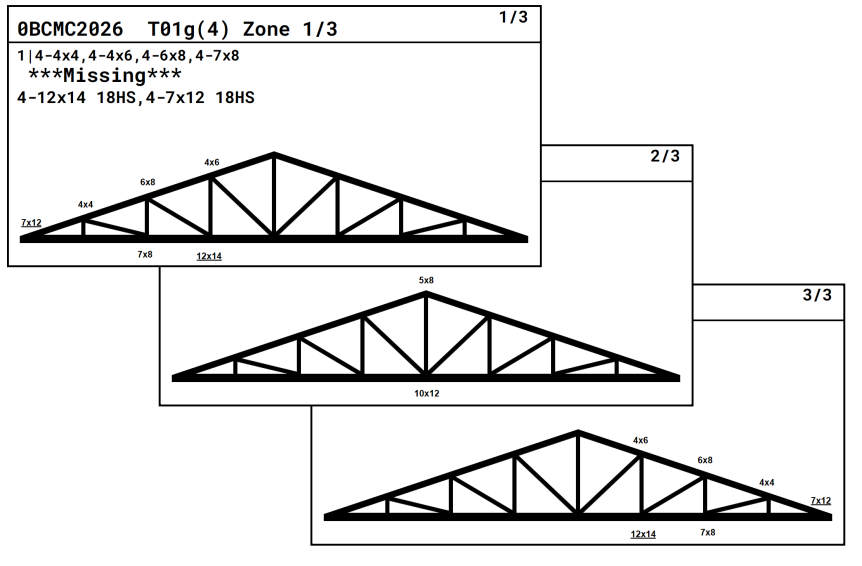
This mode is best for high quantity trusses. Here we divide the truss into zones, Left/Right, Left/Middle/Right, Left/Left-Middle/Right-Middle/Right, etc. Each zone gets one bin of plates.
Jacks
In this mode all the plates are just packed as tightly as possible into the bin regardless of use order. This avoids using 10 bins for 10 trusses that only need 3 plates each. This requires the jacks to be in their own batch.
Ag Trusses
We don’t recommend using this machine for very large runs of trusses (50+). In that case, taking full packs or full boxes will be easier. If you only have this volume occasionally, we have a special mode to combine manual and machine picking to facilitate this.
TLDR. We offer a free analysis of your usage based on your TPS files to customize your machine just for you.
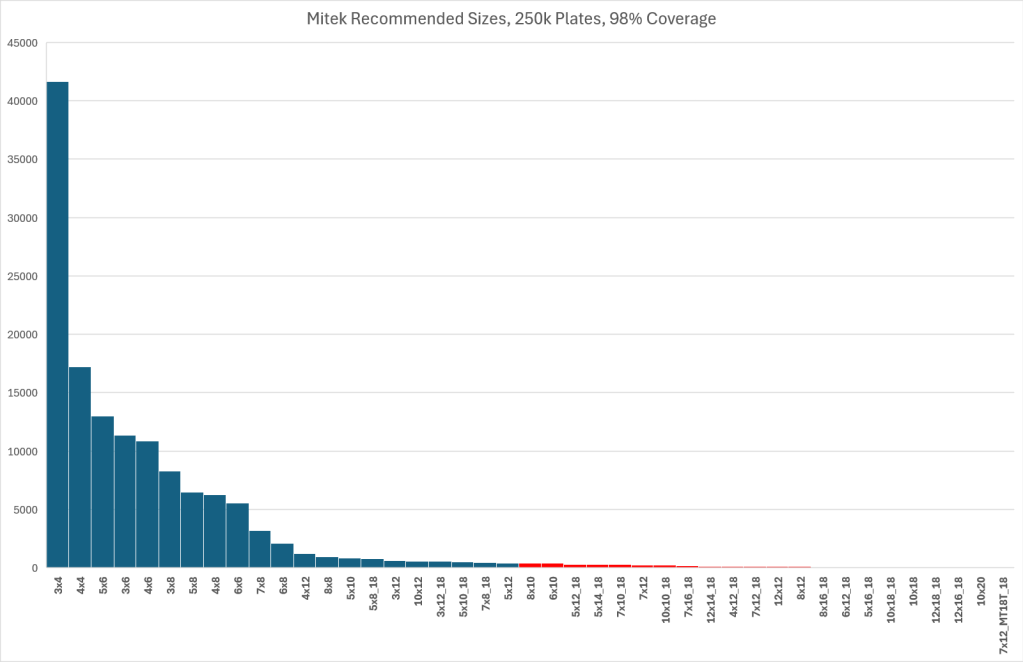
Plate usage follows the 80-20 rule. This means that only a few sizes account for most of the usage. The result is the optimal size machine is one modules (25-50 plate racks) and can cover 95-98% of usage. To even out the run time between refills, the smallest plate racks in the machine should be duplicated.
The very smallest sizes (1.5×4 or 2×3) typically account for 30% of plates used by count. We recommend this size not be placed in the machine and just be stocked at the table.
As you can see in the histogram below, a single module gets 98% volume covered! We’d love to sell bigger capacity machines but as you see the ROI is much lower for the second module.
The pneumatic oil should be kept filled and grease added to the z-axis once per week.
Long term the polymer linear bearings will need to be replaced. Expected lifetime is 3+ years.
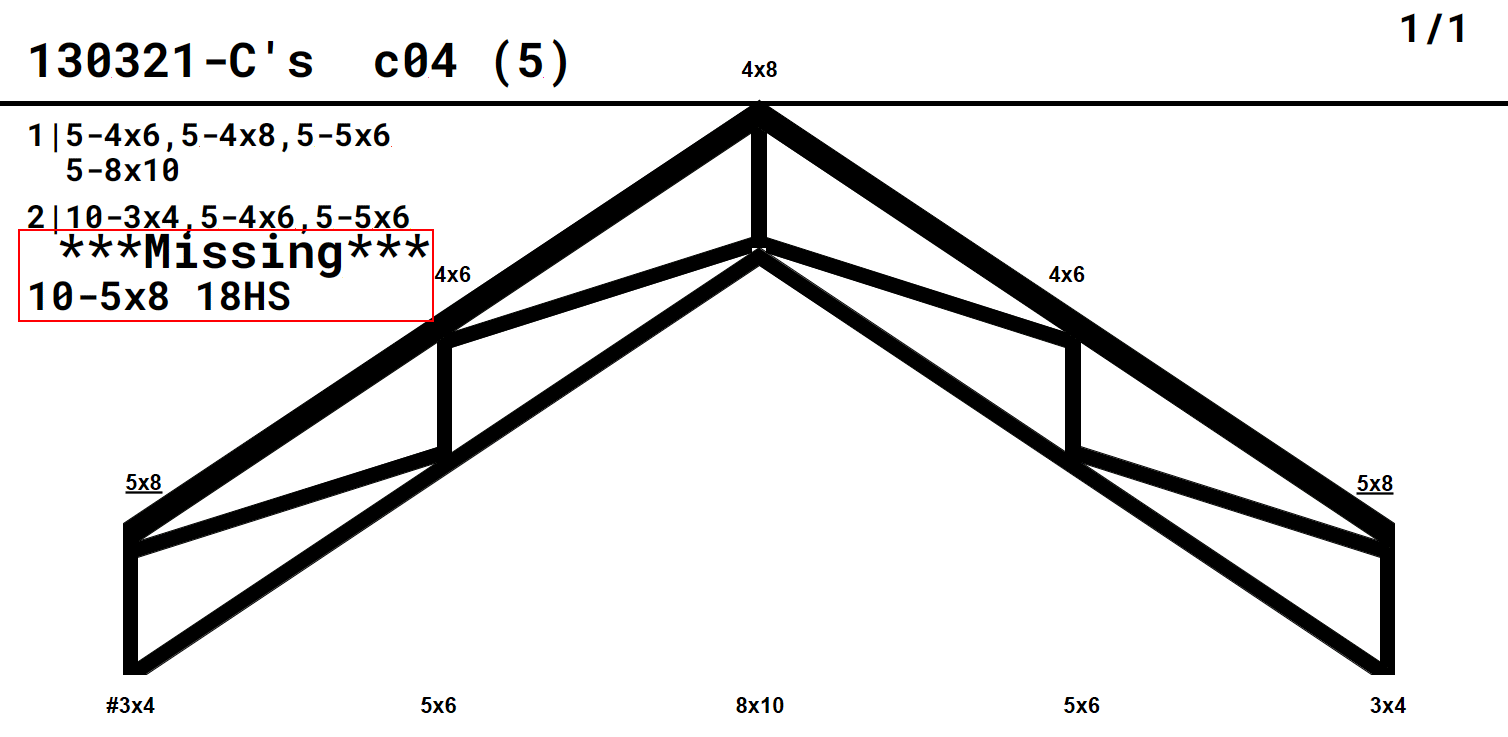
The software detects this and prints any missing plate sizes on the bin label. The operator can add these to the bins as needed. This occurs for less than 5% of the plates.
Sample label showing a 5×8 18HS plat missing.
The software includes several different layouts that we recommend as best practice. If these aren’t sufficient for your plant, we will add one to meet your needs.
This depends on the number of modules in the machine and what sizes you put in them. Typically, 24-25 plates sizes will fit in each 7.5” module. Each module costs the same regardless of the number of racks installed so you are free to choose the sizes you want.
We have racks for 1.5”x4” up to 12”x20”, 16ga,18ga and 20ga. Usage data shows us the sweet spot is 3×4 to 12″12 for normal usage. The largest sizes consume significant space with a lower usage giving a poor ROI.
50 racks (two modules) * 70 plates per rack = 3500 plate pairs or 7000 plates.
65 bins can be loaded into the machine on the lower conveyor.
The machine has a sensor for each plate rack that detects low quantity. When this occurs if another redundant size is available the software automatically switches to that rack. If no more sizes are available, the machine stops with a warning light.
The full sheet metal back and size of the plate rack make it easy to put plates in. You can put plates in at the top of the rack and let them down onto the stack. This is a one-handed operation for all but the biggest sizes. Alternatively, up to about 5 plates can be inserted directly on the stack by twisting them in diagonally.
Banded packs are available from many plate manufactures and we recommend those be stocked. The entire banded pack can be dropped in the machine at one and then the plastic band cut off afterwards, but operators prefer to open the banded pack directly on the table in front of the rack.
All plates are loaded tooth to tooth in pairs.
Yes, but not for a whole shift. The machine has several self-checks to ensure that everything is operating properly. If it needs attention or runs out of plates the software will pause operation safely. This means you can walk away during break or lunch while it is running with no problem. For a small plant the machine should only be run as needed as it will be too fast to run all the time. Larger plants can have the operator also deliver the plates to the assembly tables and retrieve empty bins.
Every machine comes with an industry standard one year warranty.
All of the Teknic servos and electronics come with a three-year warranty from the manufacturer. See the individual part warranty date on each of their parts.
The e-stop system includes dual channel buttons and safety switches on the access doors run through a safety relay. During e-stop all high voltage is removed to prevent motor movement, and all pneumatic pressure is automatically drained out to prevent any movement hazards.
Opening any robot access doors immediately stops motion. It should be one of the safest machines in a truss plant.
The machine runs on standard 110V outlet and uses 5 amps max. A dry compressed air connection is also required (low CFM).
The Plate Picker is designed to be high density and use minimal space. Click the link below to view the PDF and download it.